32-Bit Tiny GPU
A 32-bit SIMT GPU built from scratch in SystemVerilog: custom ISA, AXEL assembler, axelcc C-subset compiler, 391 cocotb tests, and a full RTL-to-GDSII run on SkyWater 130 nm with zero DRC violations.
Project Overview
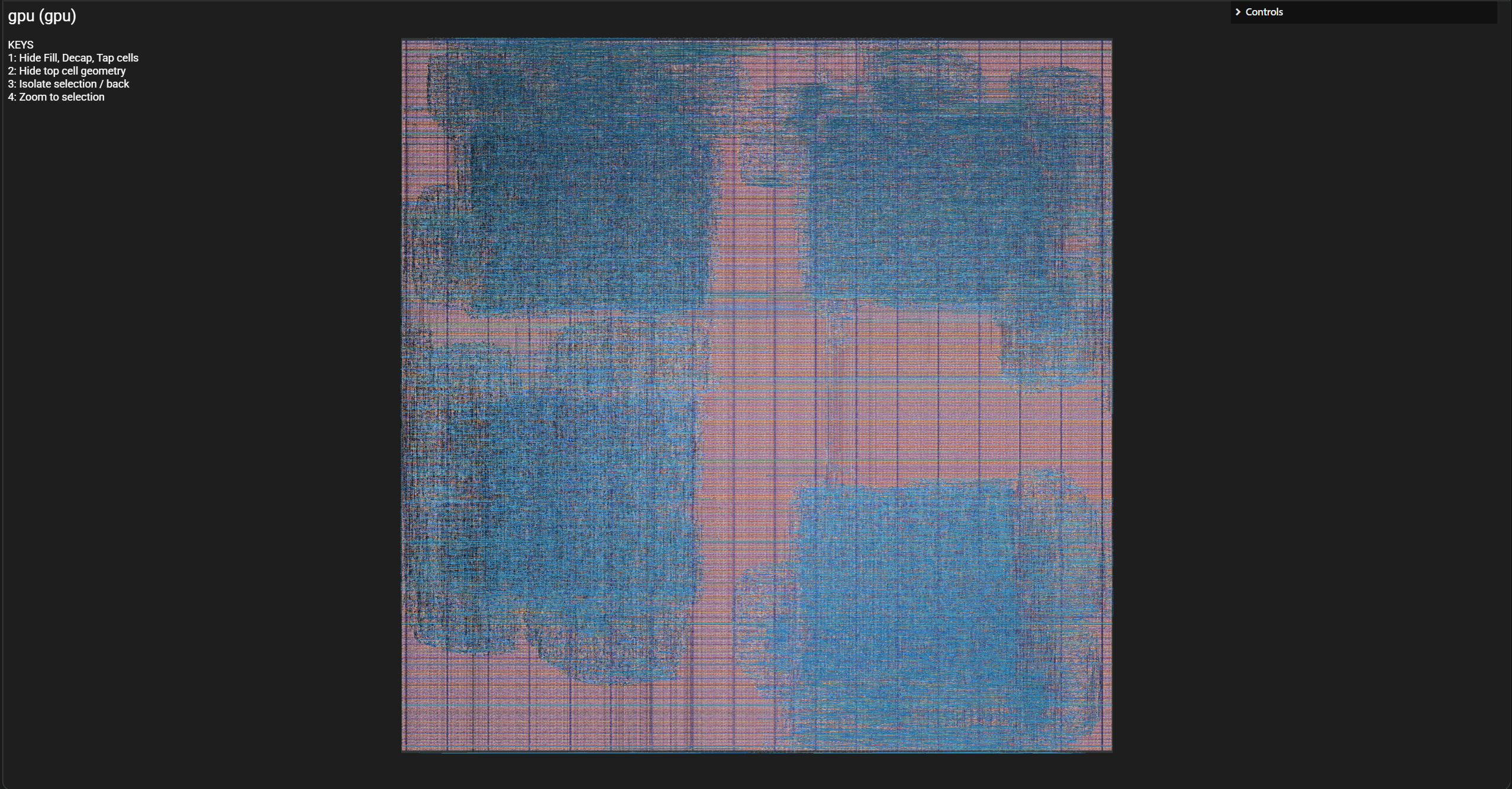
32-Bit Tiny GPU is a custom 32-bit SIMT GPU built from scratch in SystemVerilog — designed solo across every layer, from the instruction set to a manufacturable silicon layout. The design implements true SIMT execution: branch divergence is handled by a hardware warp stack with reconvergence, and a round-robin arbiter mediates memory access between warps. Around the core sit an MMIO matmul accelerator, a cycle-accurate execution trace logger, and a hardware kernel cycle counter. Software is a full stack of its own: AXEL, a C-library assembler, and axelcc, a C-subset compiler that emits kernels for the GPU's own ISA. Workloads are Q8 fixed-point neural networks, up to a chained 64-to-16-to-10 classifier running end to end on the RTL. The design has been taken all the way through OpenLane 2 to a signoff-clean GDSII on SkyWater Sky130A, and also targets the Sipeed Tang Nano 20K FPGA.
Objectives
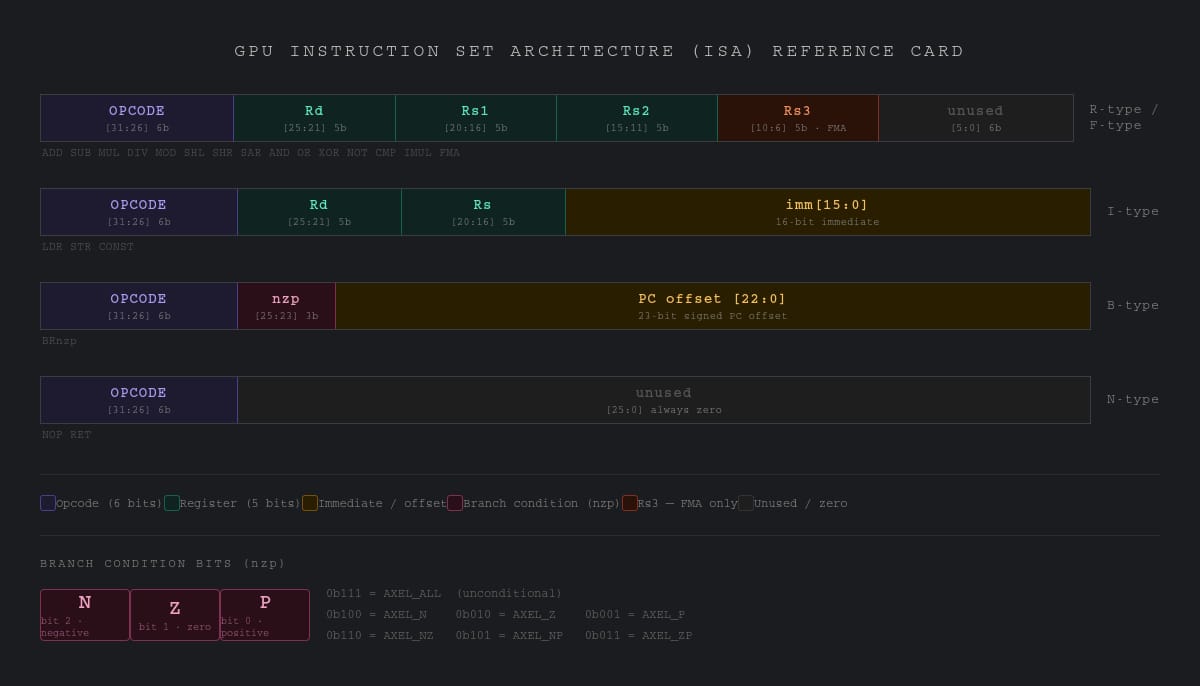
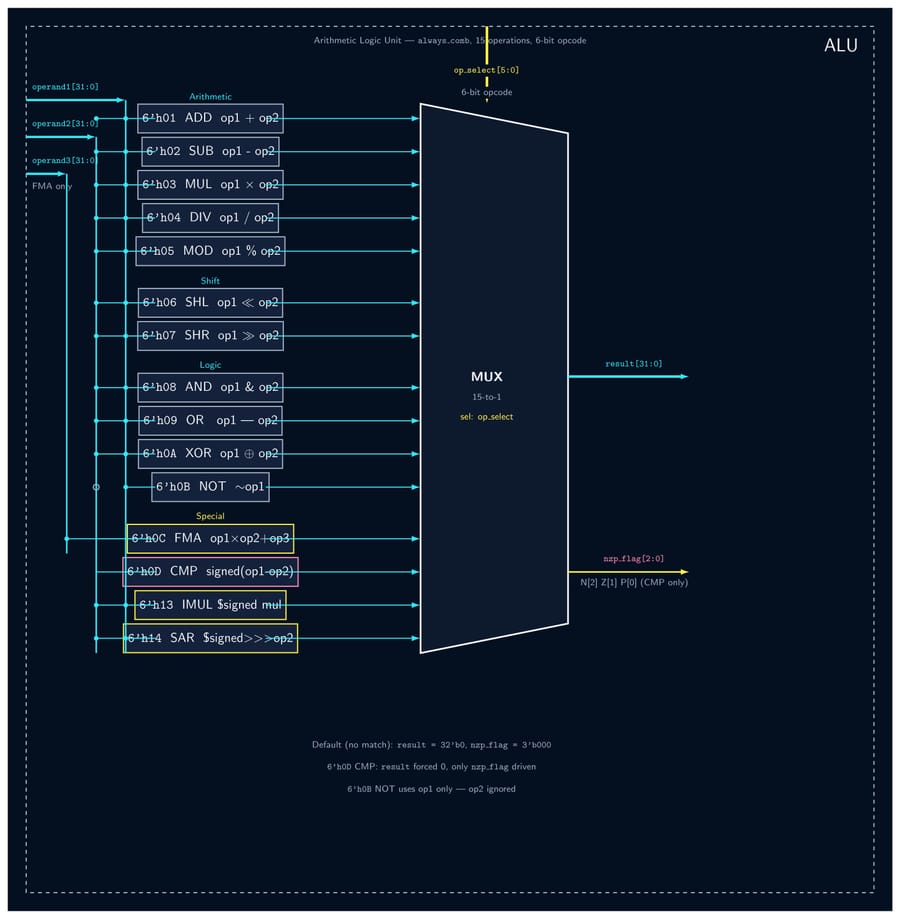
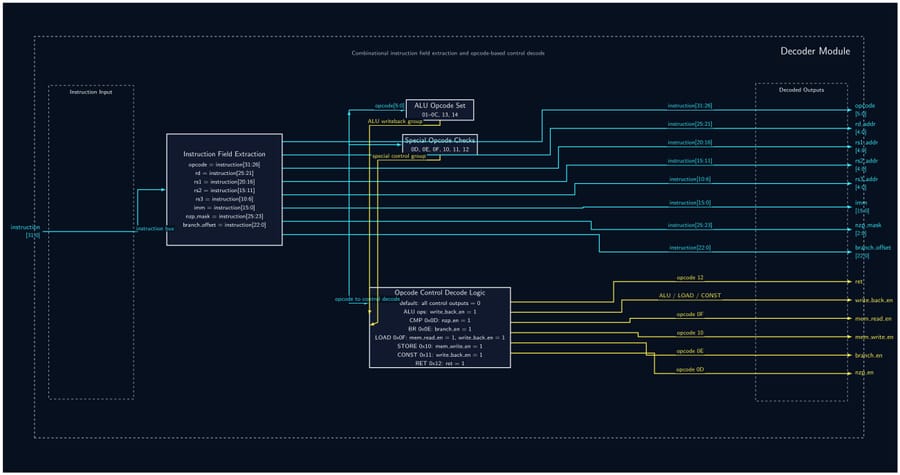
- Design a 30-instruction fixed-width 32-bit SIMT ISA with a 6-bit opcode field, spanning arithmetic, logic, shifts, memory, control flow, subroutine call and return, and an ML-oriented DOT4 extension
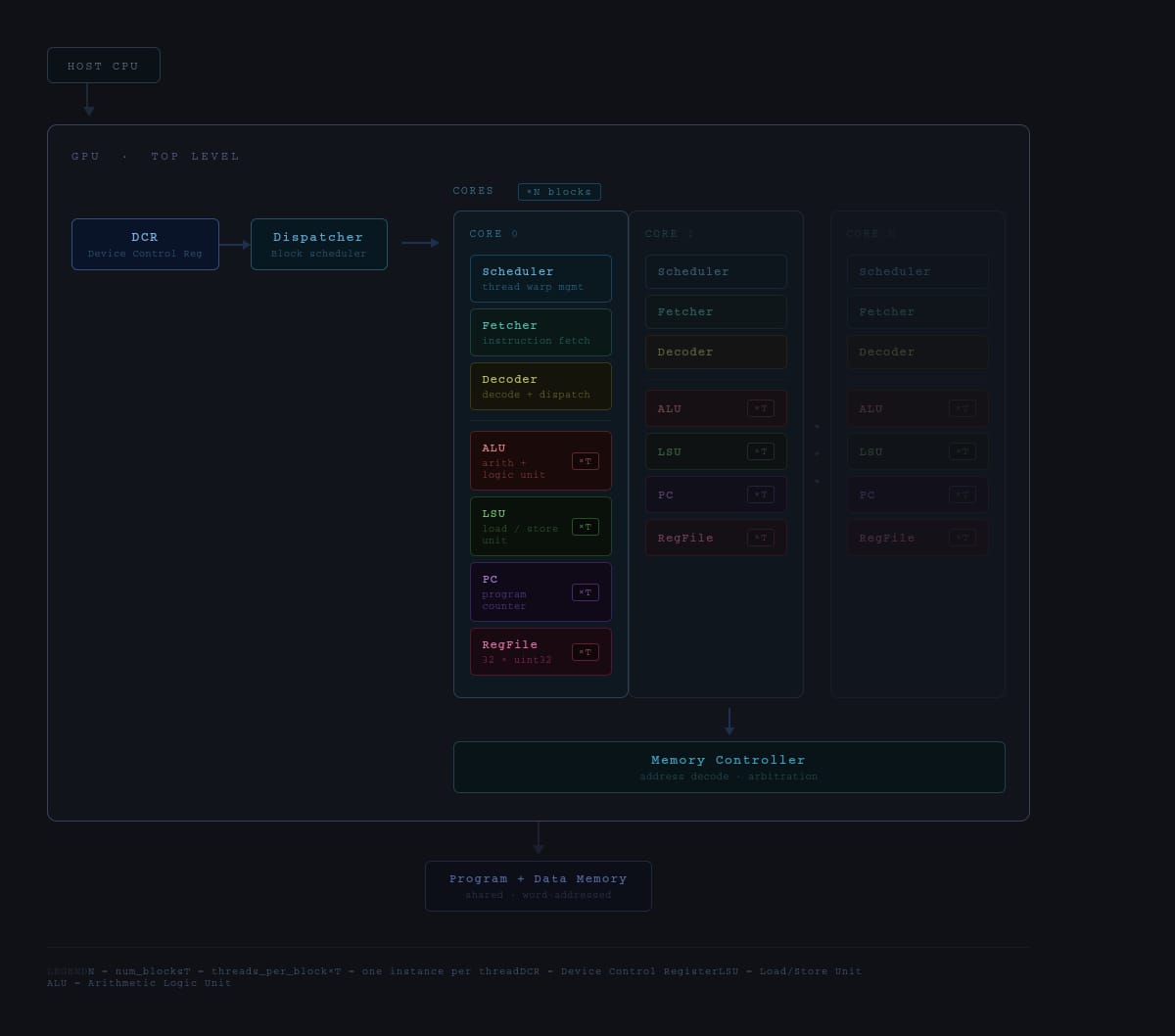
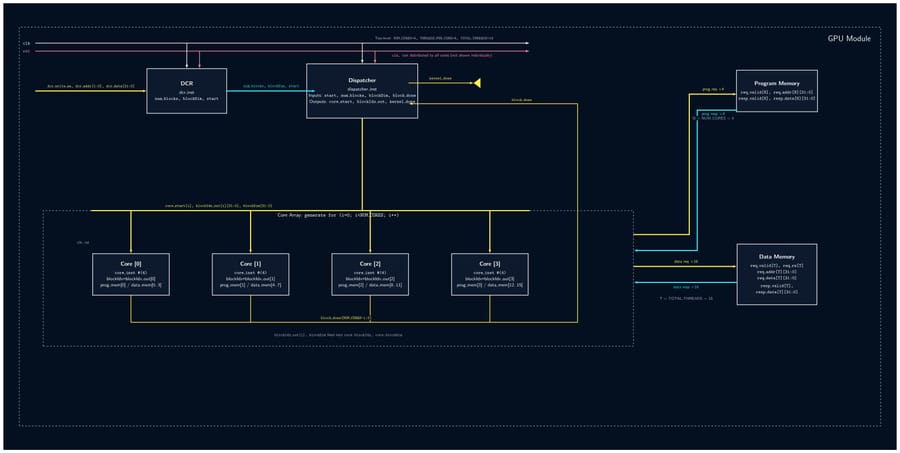
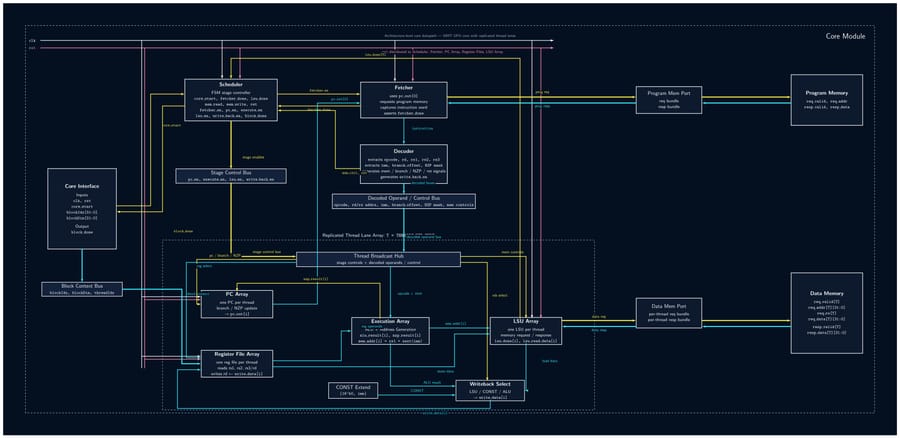
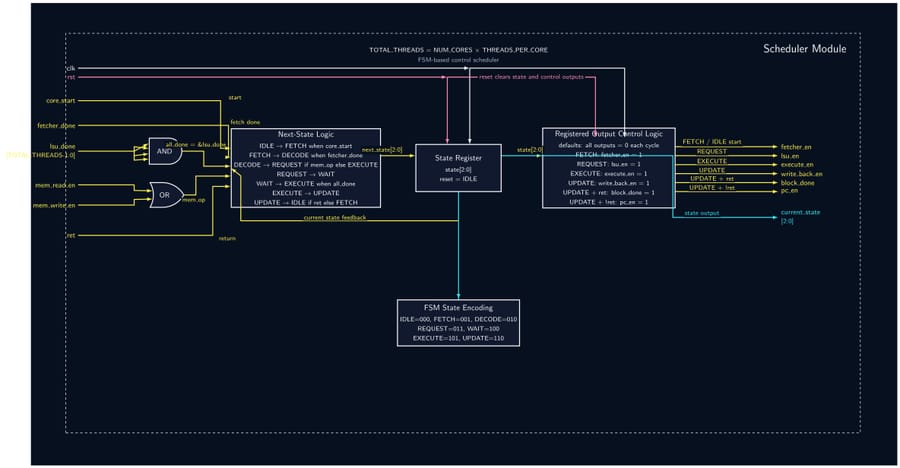
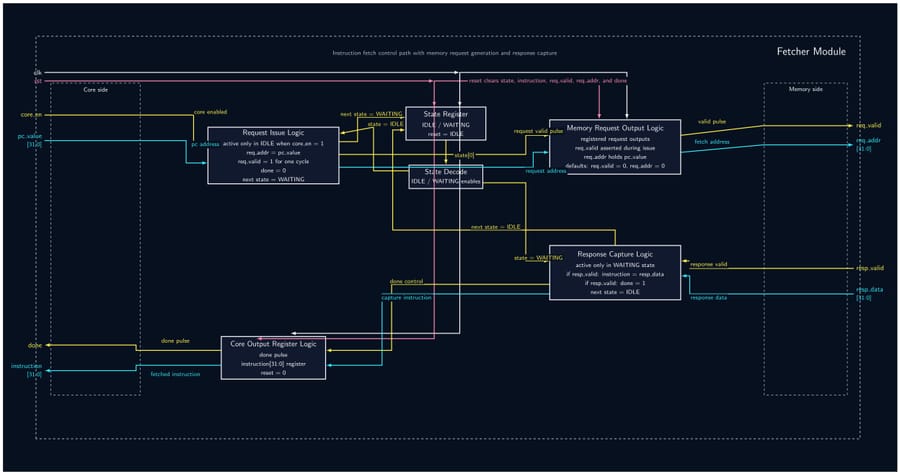
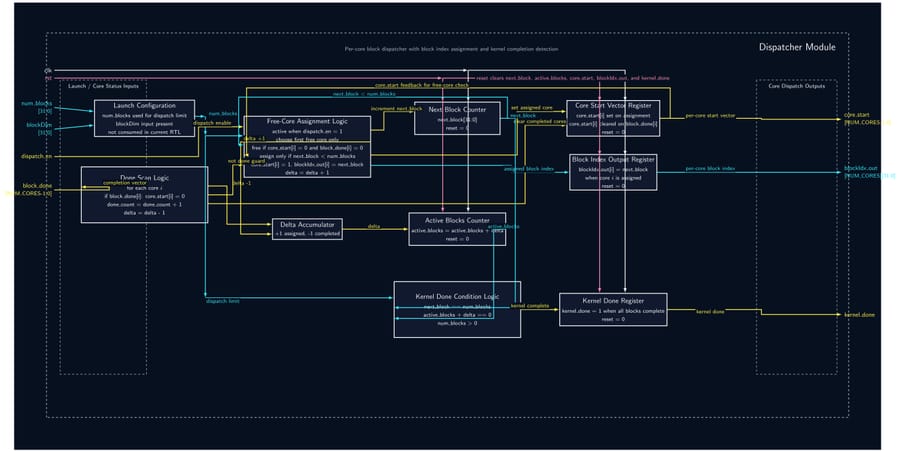
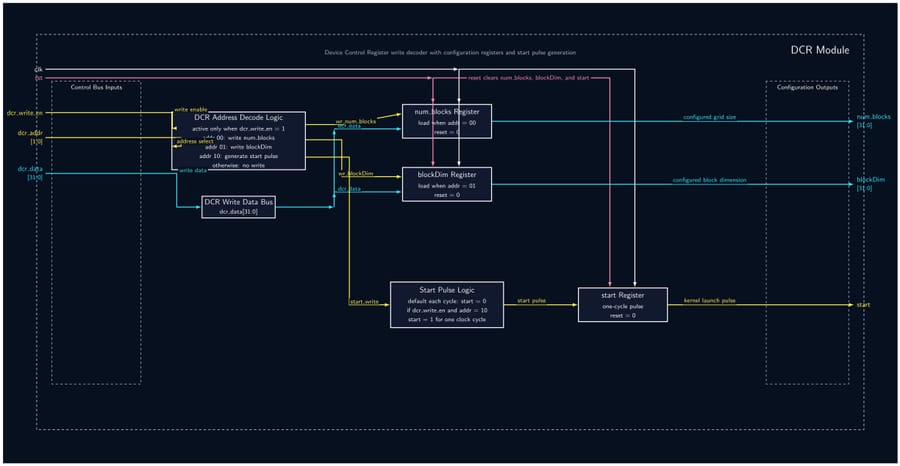
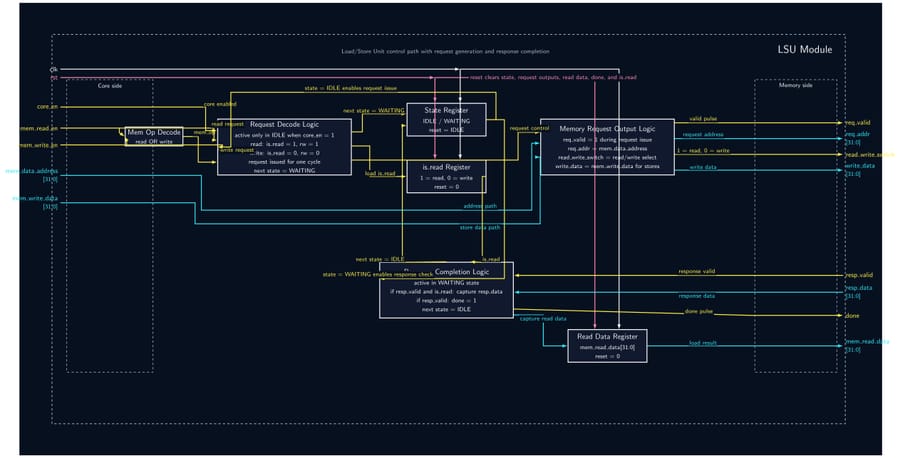
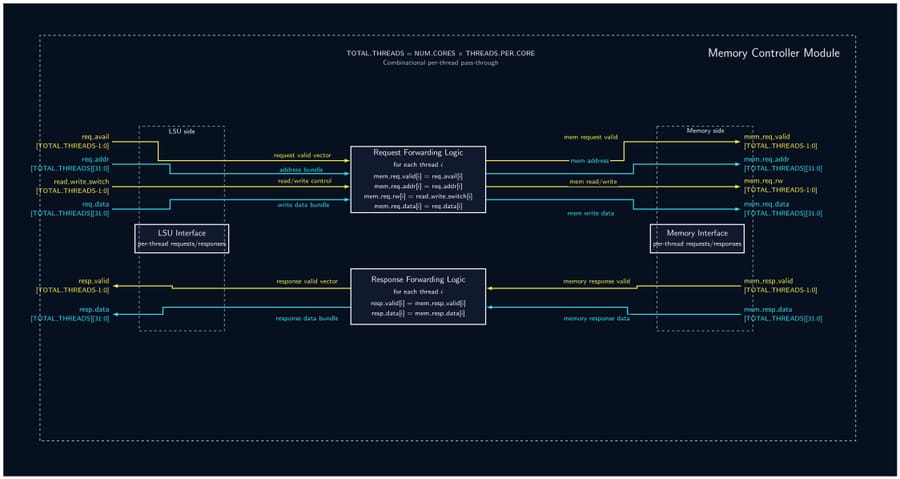
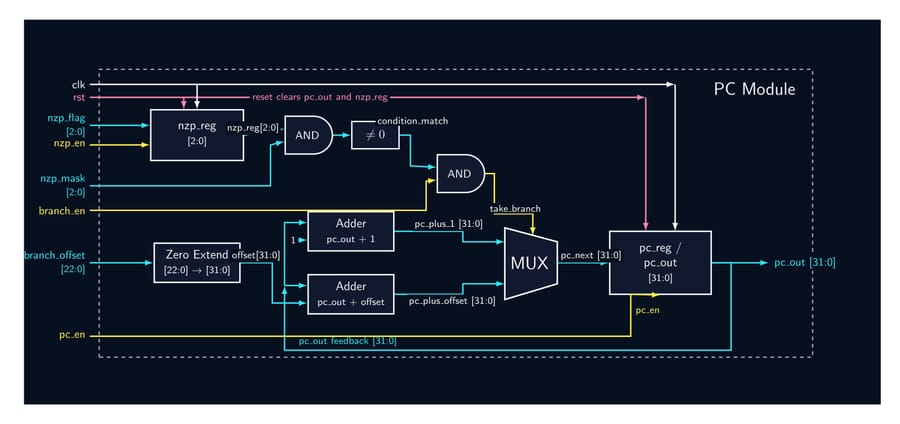
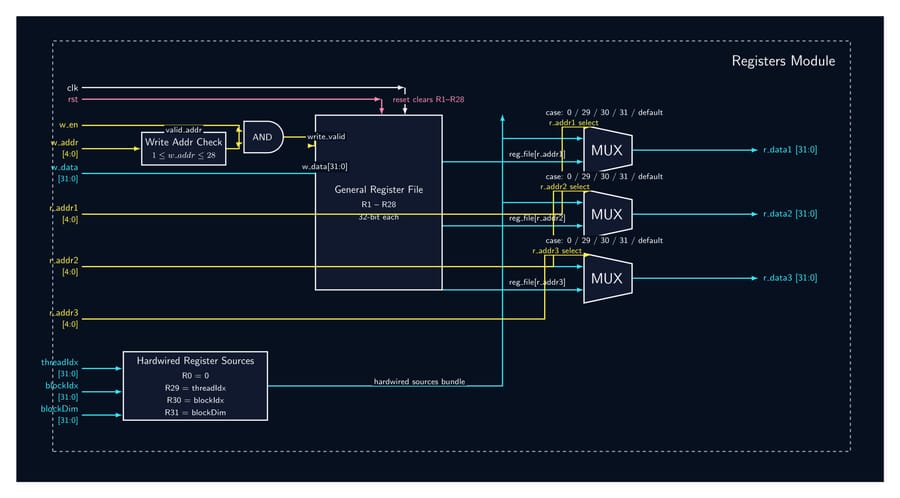
- Implement the full RTL datapath in SystemVerilog — dispatcher, scheduler, fetcher, decoder, ALU, LSU, register file, program counter, memory controller, warp stack, DCR and core
- Handle SIMT branch divergence properly, with a hardware warp stack and reconvergence rather than lockstep-only execution
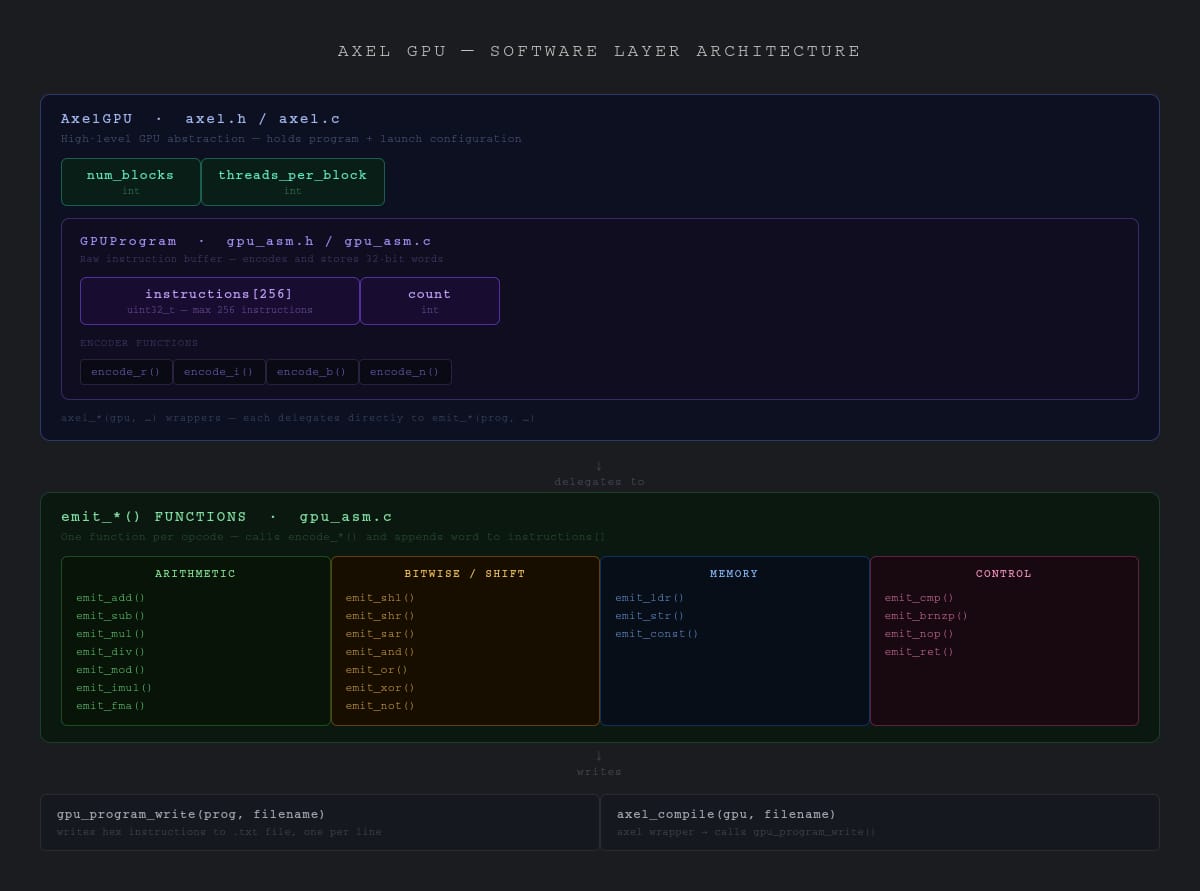
- Build a software stack on top: the AXEL assembler and axelcc, a C-subset compiler targeting the GPU's ISA
- Verify every module under cocotb rather than inspecting waveforms by hand
- Run Q8 fixed-point neural network workloads on the simulated hardware, up to a chained multi-layer classifier
- Take the design through an open-source RTL-to-GDSII flow to a DRC- and LVS-clean layout
Project Details
Status
RTL, verification and Sky130A GDSII signoff complete — compiler and kernels ongoingDuration
March 2026 - Present
Category
VLSI & Computer Architecture
Repositories
Part of this project
axelcc — C Subset Compiler
The compiler that lowers kernel C to this GPU's ISA, verified by running its output on this RTL.
AXEL — Assembler
The two-layer C assembler that encodes instructions for this ISA and emits the .hex images the GPU fetches.
FPGA Port — Tang Nano 20K
Porting this RTL onto a Gowin GW2AR-18C, reconfigured to fit a resource-constrained board.
Project Gallery